Showing posts with label pop culture. Show all posts

Friday, 23 November 2012

Game of Thrones

Is there such a thing as "chick flicks" and "boy humour" in film and tv? Are we really such simple creatures that we can draw hard gender lines when it comes to entertainment? I would like to say no, but I am loathe to admit that this hard line keeps showing up when I try to watch film or tv with my partner. Generally I don't watch much of either, so I am very picky with how I spend my precious time watching a screen. It had better be worth it - and plotless action flicks with lots of things being blown up just don't tend to do it for me.

For him, on the other hand, it is a release of his frustrations of a hard day to watch other people release their anger and play out the hero against the evil guys. He lives out his frustrations vicariously through this mindless entertainment - his own words!

And I admit my Sex And The City addiction - it's like a box of chocolates when I'm feeling down or ill. I know all of the episodes inside out but I still get a gentle high from emerging myself in the light but moving entertainment of listening to four women deal with the paradoxes of being independent, career oriented, and still seeking love. Whereas my partner is done after a few minutes.

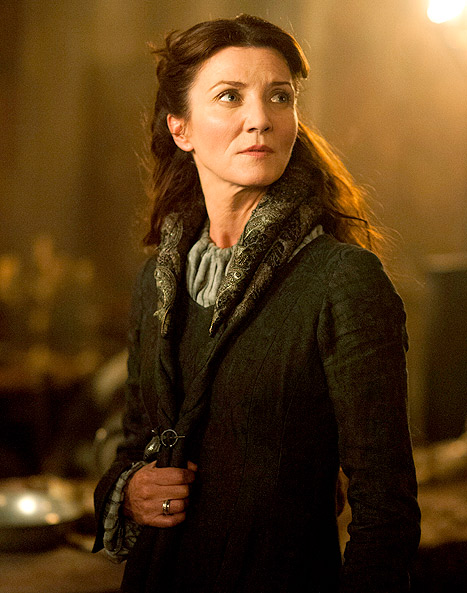
So it was quite something for us to find a series we both enjoy - and Game of Thrones has us both completely addicted, partly because of how cleverly woven together an increasingly complex cast of characters and shifting alliances keeps emerging. Who would have thought medieval power play could be so enthralling? It's like one endless chess game and we have caught ourselves discussing the next possible moves over a meal....

Which has led me to wonder at the gender aspect of this series. One friend of mine calls it "Tits and Dragons", which is kind of summing it up - minus the zombies, of course. There are endless gory bloody scenes to satisfy the need for violence, interspersed with unashamed shots of women dropping their clothes to reveal perfect white breasts. Is this not a series aimed at a particular male gaze?

I do find myself rolling my eyes occasionally when a titty shot seems contrived, inserted simply to satisfy the quota in an episode, but I can't help appreciate the diversity of characters of both gender. There are men playing out the shadow side of masculinity just as there are women playing out this same desire for violence. There are women representing the divine goddess just as there are men representing the divine protector.

The women inspire me for what they represent of the unwanted side of the female as well as their strengths. There are indeed dumb helpless blonds, who learn to use sex as an instrument of affection but also of power. There are prostitutes who both enjoy their sexuality and are prisoners of it. There are women who have ensured their seats of power by seducing with their dark side, fully aware of how to manipulate through the use of their lips and hips. And there are intelligent women, the ones who represent the queen archetype from her more enlightened side. There are the ones who refuse to be ladies, playing out their true nature in mens' roles dressed as boys or men, but not denying their identity. Women are portrayed as virgin, whore, mother, queen, crone, and never entirely dependent on the men around them for their status.

The men intrigue me. There are those with limits in the eyes of society - dwarf, bastard, illiterate, poor - who find a way to assert themselves. There are virgins and abusers. There have been several kings and leaders who have absolutely no idea how to lead, and some young princes who have had to step up and learn how to do so. There is the megalomaniac, the sadist, the torturer, the rapist, the soldier, and some of these can also be the righteous warrior, the king, the lover, the magician. The good guys sometimes suck at protecting the village, the bad guys sometimes turn out to be the good guys. Some of them are weak in the face of womens' sexuality, others are inspired by it.


The point is, there is a lot of humanity represented here. Good and evil are not represented in a squeaky clean Hollywood style, but as elements in all of us. We all have the potential to love, to lead, to inspire, to injure, to kill, to humiliate, to destroy, both covertly and overtly  I love how many powerful women there are in a context that could have become a "boy's" festival of tits and blood and power. And I love how many archetypes keep showing up without it being a moralistic story of good and evil.


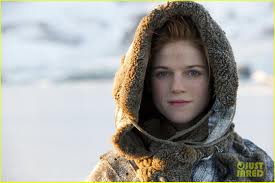
 And on a personal note, I love how many redheads keep appearing!


Nature shows up as a powerful force as well - in spirituality, in seasons, in the long summer and the long winter, the representation of life and death, in prophetic dreams, and in the White Walkers. There are many layers of mystical storytelling that represent so much about us as men and women, that makes it unexpectedly appealing and

Only one question remains: How the hell did the zombies make it into this story?

Saturday, 15 October 2011

The Neo-Cons hijacked Wonder Woman!

I have to admit, I am a little concerned. It's not just a matter of resisting the re-writing of a character who I consider to be pop culture's most important female role model. It's not just a matter of resisting change as such. Heck, when they showed photos of model-come-actress Adrianne Palicki in the newly styled Wonder Woman latex costume I kinda thought it was hot.

At least it was an improvement on the attempts to re-vamp the comic book character's outift a couple of years ago, when she looked like a 1990's fashion victim (see left)....


No, my concern goes deeper. Having just watched the 2011 pilot of the NBC Wonder Woman series, I am convinced that some neo-con lawyers were heavily involved in the script-writing. I know it sounds funny, but I am serious - there is some uncomfortable political agenda behind much of the script. And the consistent "evil-eye" hard face worn by Palicki throughout the pilot episode did nothing to soften the blow of references to torture as evidence gathering, manipulating the legal advisory department to sidestep the law, and use of the PATRIOT Act to justify some highly questionable behaviour.

Wonder Woman's character was invented by a psychologist during the second world war when DC Comics approached him to create a new patriotic hero. He was an adamant feminist and created the first female superhero, whose powers were bestowed upon her by the (Greek) gods and goddesses. Her task was to bring the lessons of peace, love and justice to a world that was warring. She was given a lasso of truth and bracelets to deflect bullets. Wonder Woman never attacked, she only ever defended....

70 years later, in the umpteenth attempt to bring Wonder Woman back into mainstream popularity, Palicki lashes out with her golden lasso and strangles people to unconsciousness, she threatens wounded bad guys and jabs them with needles to get blood samples. In fact she silently admits to using torture to elicit evidence from one man. Her detective ally refuses to let her make a move based on this evidence gained as "poisonous fruit" but she remains righteous - apparently if many lives are at risk, it's ok to torture the bad guy.

Wait a minute. I'm sorry WHAT???? Does this not sound reminiscent of the Bush
administration's justification of the use of torture to elicit evidence from detainees in Guantanamo Bay and hundreds of other locations around the world where the CIA sent their "extraordinary renditions"?

Any international lawyer will tell you that the prohibition of torture is one of the few absolute pre-emptory norms which exist in concrete terms. Despite what the neo-con lawyers were advising the Bush administration in the torture memos.

It went further in this disturbing pilot episode. At one point, a character who is Chairman of the Senate Judiciary Committee confronts Wonder Woman, accusing her of such disgusting behaviour that "not even the most liberal reading of the PATRIOT Act would justify what you did". The USA PATRIOT Act - in full, the "Provide Appropriate Tools Required to Intercept and Obstruct Terrorism" Act, introduced in 2001 - was a bill passed in response to the Sept 11 attacks. It removed numerous procedural restrictions on police, FBI and CIA actions, leading to indeterminate detentions, huge invasions of privacy, a veritable roll-back of civil rights in the US and a discriminatory focus on immigrants. It was also was part of the neo-conservative lawyers' justification for the use of torture.


So what is one to think of the fact that the woman whose original task was to teach the ways of truth, peace, justice and sexual equality, has now been reinvented as a unilateral crime-fighting
machine who goes above and beyond the law, ever scowling at both her enemies and her allies, threatening and in fact using force, justifying torture to elicit evidence?

Her "don't mess with me, I'm a hard bitch" face seemed to portray this deep shift in political paradigm. (I'm serious, she only smiled once in the whole episode, when she spoke to the victim around whose plight the episode centred, and of whom she made a point of informing everyone at her press conference that he was a black teenager from the ghetto. I was a bit confused until her new right wing stance started to become evident, and my only conclusion was that this was an attempt to show she really does care about the underdog. Kind of like Bush flying over New Orleans a few days after Hurricane Katrina, to show he really cared, too.)

Perhaps this 21st Century Wonder Woman is after all completely in line with what happened to the national identity of the country for whom she was invented 70 years ago. Then it really was about bringing ideals as a leader to a new world order. In recent decades it has rather appeared to be about imposing ideals as a unilateral world police force down the barrel of a weapon of mass destruction. Perhaps I shouldn't be so disturbed that my long-time heroine is once again speaking the truth, I should just accept that the truth is a little uglier. Perhaps I should accept her ever angry face as the replacement of the one that was created of the earth and bestowed with Aphrodite's beauty and Athena's wisdom, just as the face of US foreign policy has lost its beauty in the decades since the second world war.

Still I am disturbed, and it's because of the very reason I love (the original) Wonder Woman so much (see my previous blog posts). She is a pop culture role model. If she is now the voice of the 21st Century America, it disturbs me that this might be internalised by the next generation of world leaders.

And I am disturbed as to what happened to her feminist ideals as well. She used to be a champion of sexual equality, (apart from demonstrating that women can be both strong and vulnerable, in one comic book adventure rather than act from pure hatred or righteousness, she
convinced a female member of the Nazi regime to return to her humanity and abandon the Nazi project) now she is spitting hatred at the sight of another powerful, beautiful woman and threatening to kill the female villain played by Elizabeth Hurley (shown left in character).


And although Palicki's Wonder Woman makes a point about dolls being made in her likeness with impossible breasts, she admits that she needs to sell them in order to fund her crime-fighting, and she even uses her latex-packaged breasts to sexually intimidate men: "Like my outfit officer? This outfit opens doors for me. It's gonna open that one, isn't it?!"

I'm not sure this was what Wonder Woman's original creator had in mind when he published in The American Scholar in 1941:
"Not even girls want to be girls so long as our feminine archetype lacks force, strength, and power. Not wanting to be girls, they don't want to be tender, submissive, peace-loving as good women are. Women's strong qualities have become despised because of their weakness. The obvious remedy is to create a feminine character with all the strength of Superman plus all the allure of a good and beautiful woman."

I breathed a sigh of relief to read that NBC has already axed this failed pilot. And I have to re-iterate, it's not because I'm opposed to an update of Wonder Woman. It's because her core values had been hijacked for disturbing political ends. It's not the fate we should wish upon any super hero!

Tuesday, 19 April 2011

Ah! My Goddess!


I have become addicted to a most curious Japanese anime series called "Ah! My Goddess!" It's so odd and at the same time incredible! A young man, Keiichi, is struggling through life, always suffering misfortune, everything seems to go wrong for him. But despite this he is still generous to others, which catches the attention of the goddesses watching down over earth (and all the other stars and planets which make up the system of birth and death).


One evening he makes a phone call to a friend but instead is put through by unknown forces to the Goddess Helpline (of course there is a Goddess Helpline, didn't you know?!) and a goddess appears to grant him a wish. When he tries to think of what to wish for he can't think of anything he feels
worthy of. The goddess, Belldandy, starts telling him how he is surrounded by love because of how he makes other things and people feel worthy and loved and that he is truly a good person who other aspire to be like. He is so blown away by her and by her words that he wishes to have a goddess like her by his side forever...and so begin their adventures.

When the wish takes effect, (and is registered in the Goddess system!) Belldandy must literally stay by his side. Forever. If they try to separate in any way then the "system force" comes into play and something happens to ensure they are not separated. I mean obviously, when something is registered in the Goddess System it cannot be undone, right? Be careful what you wish for!!

All sorts of archetypes keep showing up, like the queen and the lover, and Belldandy has a guardian angel - who she introduces as her higher self - who guides and protects her. She uses her powers now and then and prays to the spirit of money or sustenance to take care of their needs, and they are always instantly taken care of - although it doesn't necessarily appear that way at first. Sometimes things don't look the way Keiichi wants or expects, and he complains about the hardships, but she keeps chirping that as long as they are together she is happy, and that they are so blessed by everything, and at the end of each episode he realises that things in fact have worked out for the best.

He starts to realise that if you follow the goddess' lead you will find yourself in a place that soothes your soul (his exact words!). There is so much I love about how this is an anime translation of the concept of manifestation, trusting your higher self to lead the way, and asking the universe to take care of your deepest desires and needs. Things don't always show up the way we expect them to, we don't always like what we see, but we are always being provided with what we need. Instead of letting the mind think it's in control, let the spirit guide the way. If we just trust there is a higher force - the "Goddess system force" to be exact! - and don't try to resist it, then everything will be taken care of and provided for.

This notion of manifestation is exactly what "Ah! My Goddess!" is all about! The opening episode begins with a narration by the goddesses questioning how much of our lives is fate and how much is up to our choice to be open to possibilities. The universe is always listening, your thoughts and attitudes will always be answered. If you think "I wish I had more money" then the background thought is "because I don't have enough". The universe will respond to this thought of origin. You will experience more wishing, more longing, more of "because I don't have enough". This manifestation of misfortune for Keiichi was a result of his continued monologue about how misfortunate and unworthy he was.

But if you think "I am grateful for the abundance of money and wealth (love, great friends, health, whatever) in my life and for its continued increase" then you will experience gratitude and wealth (and love, great friends, health) and the universe will bend to your will and provide more opportunities for gratitude and more wealth (love, great friends, health, etc).

This is what the goddess Belldandy slowly teaches Keiichi in each episode. Be grateful, ask for what you truly desire, and let the system force click into place. Single mindedness (in the sense of having a clear, directed vision of where you want to be in the near and distant future, not mixing it with doubt or and unclear heart) is the key. And be aware that you will get exactly what you wish for - a goddess by your side FOREVER? Then that's exactly where she will be. Forever!

It's a cheesy script and an incredible concept. Really worth a giggle: watch a couple of episodes here!

Tuesday, 12 April 2011

Valkyries of War


Though I would not be proud to stand up and say that women are equally responsible for atrocities committed in times of conflict as men, it would be a false dichotomy to deny it. In fact, I find the tendency to point the finger at men for being the wagers of war, and to assert that if more women were in power we'd have less war, to be utterly abhorrent.

Why? Because it creates a divide, and perpetuates another war that is otherwise slowly dying out and really has had its time. The battle of the sexes is no longer a war we need to fight. To lay the blame at the feet of one gender and expect that women, purely by reason of their gender, would not resort to war in international relations, is a naive and divisive standpoint.

This idea has been challenged recently with some interesting twists in the media. Obama was at first reticent to use force in Libya, and many of his (male) security advisors were against getting involved in another expensive, uncertain conflict on foreign shores, given the messes in Afghanistan and Iraq. In the end it appears it was due to the pursuasiveness of three top women advisors in his administration that he was convinced to take military action. And because it was three women, the media leapt on it.

They have been called the "Valkyries of War", and the mission has been dubbed by one journalist as the "war of the three sisters". Juicy stuff! And cause for many questions.

Secretary of State Hillary Clinton, together with Samantha Power, senior policy advisor on the National Security Council, and US ambassador to the UN Susan Rice, are "credited" with having made the final push on the no-fly zone and the US involvement in the UN authorised use of force in Libya. And of course the media love this unlikely trio of war-hungry women, with New York Times stories of the "girls taking on the guys" in the White House, and NBC stories covering the phenomenon of women policy advisors taking on the men.

There seems to be a suprise that women would give the push for involvement in warfare. But there are two sides to this story to consider.

One is that women have, unfortunately, but realistically, been involved in warfare throughout history.
Although it requires a bit of digging to find them, there are many historical examples of women leaders who waged war and fought on the frontlines of battles. Characters like Joan of Arc, ancient Arabian women warriors Kahula and Wafeira, 11th Century Queen of Arragon, 16th Century Grainne O'Malley the Irish Pirate Queen (depicted right, at her historical meeting with Queen Elizabeth I, another determined female leader of the time) are not unique examples. And let us not forget the 20th century's Margaret Thatcher, a prime minister whose legacy includes the Falklands war as well as her integral role in ensuring her pal August Pinochet did not get extradited from the UK for his pending trial in Spain for crimes against humanity.

In recent history there were a number of women on trial at Nuremberg in the Doctor's Trial and the Justices Trial, many of whom were executed for their participation in heinous atrocities at the concentration camps and in the Nazi administration. Currently at the Extraordinary Criminal Chambers of Cambodia, where members of the Pol Pot regime of the 1970's are on trial, a number of women stand as defendants. (See one of my favourite blogs for more info on this: IntLawGrrls, where the image below of Maria Mandel, executed for her role as a prison guard at Auschwitz, is also from.)
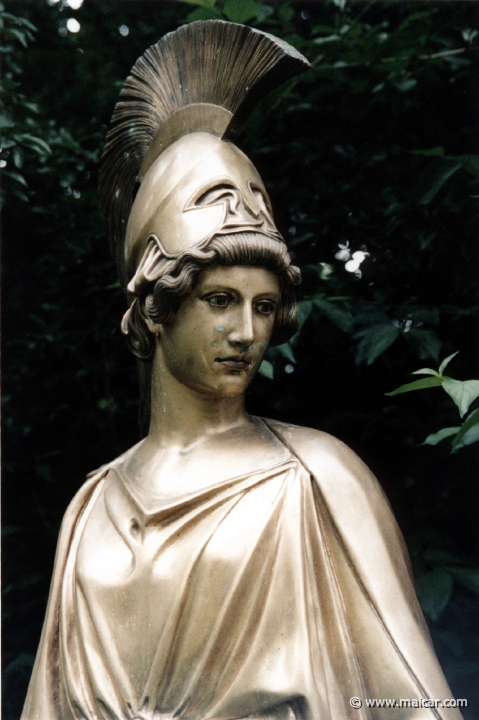


And in mythology there are plenty of images of the female warrior. The very fact that the US involvement in Libya has given rise to talk of "Valkyries of war" is testament to the fear instilled by such images. The destroyer is in many goddess archetypes, like Kali, Nike, Athena (depicted right), Minerva, and indeed the Nordic Valkyries, though interestingly enough these goddesses also often embody the corollary nature of life-giver, fertility, mother.
And let's not and let's not forget such pop culture warriors as Xena Warrior Princess, Wonder Woman (see my blog post on WW), Shera, Buffy the Vampire Slayer, Lara Croft (or any other number of Angelina Jolie characters!).


We women have the capacity for destruction in us as well. Any notion that women running the world would ensure a war-free existence is naive, unbalanced, destructive to forwarding a new dialogue of equality, and even patronising. Not that I champion women as war-wagers, but let's move on from such essentialist ideas as the "fairer sex" being all peace-loving, and men being the only guilty ones. Let's start from reality and move forward from there.

The other side of this story is that the media jumped onto the idea of the Valkyries, as if the these advisors pushing for warfare were blood-lusting destructive sirens, who lured the innocent Obama into war. But perhaps there were other factors in the political stance taken by these women?

Hillary Clinton was reportedly luke-warm on going in to Libya, but it is asserted that memories of Rwanda during her husband's presidency led her to shift to a more pro-active stance. Sarah Power was given her post in the Obama administration at least partly due to her outspoken stance on genocide and the need to intervene. She has won prizes for her publications on this very point. And Rice was also part of the Clinton administration when the horrors of Rwanda and the failure of the international community to intervene became apparent.

While the atrocities in Libya cannot amount to genocide as a matter of international law, it could be posited that these women were pushing for intervention for humanitarian reasons, rather than for blood-lusty power-based ones.

The point, to me, is that if there is anything "inherent" about war and conflict, it is perhaps the "unconscious masculine" in us all, both women and men. The waging of war for one's own selfish ends - oil reserves to keep the car industry going, control over other resource fuels or water, control over regions which threaten one's own cultural and political domination, religious ferver - these are the result of the unconscious masculine, the shadow of the warrior archetype. And that potential is in all of us.

On the other hand, the conscious masculine, the healthy warrior archetype, is willing to fight when it is necessary. When one's territory, family, safety, integrity is threatened by the force of another's shadow-driven attack. It is entirely appropriate to bring out the (she-)wolf and to fight to the death in some situations. Humanitarian intervention may be what inspires this conscious use of force. In fact it may well be a feminine (note: not "female", but "feminine"!) urge to protect and heal that leads to such interventionist use of force. And that potential is in us all as well. (See my blog post on "Dear Woman")

Valkyries of war? Maybe, but let's consider what is behind the political decision, rather than simply focus on the gender of those pushing for these decisions.

Saturday, 31 July 2010

The New Wonder Woman?


I've posted in the past about Why I Love Wonder Woman and everything she stands for. Her back-story is one of female strength, wisdom and beauty, bestowed by the gods and representing everything that a female warrior is. Her creation is one of early feminism, and she stands for peace and justice. So it's probably about time they made a film about her, among the spate of comic book heroes being brought to life on the big screen.

It's a shame, then, that DC Comics have decided it's time to "update" this 70 year old icon. Modernisation is not a bad thing in and of itself, but if it entails changing everything familiar about this female role model, from her costume to the very roots of her existence, one has to question it. Why, oh why DC???

Their justification for changing her famous costume has been that critics questioned how WW could fight crime without her bits falling out. She's a comic book super hero, people! They always fight crime without their bits falling out! That's why Superman wears his underpants on the outside and Catwoman never has to zip herself in or out of her impossible latex getup.

It should be said, WW has been "updated" in the past. Originally her creator had her wearing a star-spangled skirt, until it was conceded this would be flying up and around her head most of the time she was in action, so they put her in shorts instead. These gradually became hotpants and then even a high-cut leotard over the decades, but at least they remained recogniseable as WW's getup.


Reducing WW's bust size may be a bit of a more realistic move, but removing the gold W from her breast??? Granted, this was only introduced in the 1980's, prior to which WW wore a golden eagle on her chest. She had, after all, been invented during the second world war as an American hero. DC decided to make er appeal more universal by having the Wonder Woman Foundation (an actual women's rights organisation) present her with a doubled W and asking her two wear it to represent women around the world.

So she has seen some changes over the years. The worst was in the 1960's when the story writers for some inexplicable reason decided to remove all her powers and her costume altogether, and name her The New Wonder Woman. She was a mod crime fighter in a fashionable 1960's minidress, but she was not a super hero. Thankfully DC returned to its senses in the 1970's and WW was given back her true identity.

Given that WW's readership has always been slightly smaller than that of her male counterparts, and given the trend of bringing our old fave comic book heros to the big screen, now is indeed the time to vamp up WW's image. There has been talk of a film for many years now, but beyond the basic 80's style animation film that was released straight to dvd in 2009, not much movement has been made. So it is understandable that at a moment of celebrating her 600th (unofficial) issue on paper, DC is looking to gain more attention for its protagonist female, and one suspects the push to film may follow.

But it was a mistake to mess with her backstory, depriving her of the upbringing on Paradise Island (Themniscyra) among the Amazon women, shifting her pacifist origins into an urban commando chic. And it was a big mistake to strip her of the familiar colours and garb we have come to know. Especailly as it has been reduced to bad 1990's bolero fashion and black skin-tight trousers. She has lost all originality.

She resembles the splinter character Donna Troy (right), who was developed from WW's adopted younger sister.


Her bullet-resisting bracelets have become tie-on gauntlets and her corset has an eerily Spiderman-like design. And perhaps the black choker was introduced because the new gauntlets have lost their subtle suggestion of S & M (which WW's original creator had as part of her sexuality and her strength). Unfortunately the overal result is a shopping mall teenager instead of a mature arse-kicking ambassador of justice.

DC, if you want to raise the profile of this all-important female hero, do so with some respect for her creation, her symbolism and her long-lasting appeal. If you reduce her to a fashion victim with a less impressive history driving her, the endless stalling of bringing her to film will continue. Everyone wants to put her on the big screen, no-one knows how because of the inconsistencies in her character. Keep it simple, keep it strong. And keep true to what is so insipiring about this feminist, pacifist heroine.

Thursday, 24 June 2010

First female leader for Australia - enter the style police

This morning history was made in Australia as the first female Prime Minster was sworn in by the first female Governor General (the Queen's representative in Australia). Julia Gillard is now the country's leader and the significance of this event is not lost on many women.
(New Prime Minister Julia Gillard left, Governor General Quentin Bryce right)

The Labour party in Australia voted internally to oust Kevin Rudd, the Prime Minister who was lead Australia into environmental responsibility, and who finally apologised to the Aboriginal population for the way they have been treated as a people. Recently his popularity plummeted and Deputy PM Julia Gillard stepped up to challenge his leadership of the party and of the country. The party gave her full support and she took over the leadership in one night.

Although the support she received from the right faction in the otherwise slightly-left-of-centre Labour party was what made the difference in taking up the lead, Julia Gillard has the courage and unapologetic leadership skills to take this position the way she has. She has said to the media that she made the move because she saw a good government losing its way and she felt it was up to her to keep it on track.

A former lawyer, Gillard worked for an industrial relations law firm, first as a work experience junior, and later as partner. She moved to state politics in 1996, and federal politics in 1998. Australia is a truly sporting nation, and the fact that Gillard is a big fan of Australian Rules football club the Bulldogs raises her popularity amongst the most blokey of Aussie blokes as well.

So why is it that within HOURS of being sworn in as the country's first female PM, this highly qualified, highly educated, strong leader has news items appearing which speak of the colour of her hair (she's a natural redhead) and her style of dress??? With headlins like "Enter the Style Police" and "Julia Gillard needs a new stylist". Why is it that a woman in politics is judged so much more harshly on her appearance than her male counterparts?

A few years ago when Hillary Clinton addressed a graduating class at Yale, an audience of America's most brilliant young women, she remarked with weary irony: "The most important thing I have to say today is that hair matters ... pay attention to your hair. Because everyone else will."

My guess is it's simply because it makes for popular media. Women in politics have had make-overs and been photographed for glossy mags, which can be seen as a degradation of their professional position, but it can also be seen as a way of speaking to women through popular media and demonstrating the many faces of the female role models we have. While it can be frustrating just how much attention was focused on what dress Michelle Obama wore to Barak's inaugrual ball, it can also be seen as a way of drawing popular attention to this strong, influential, intelligent woman in a position of power.

While it's a shame that women have to measure up to the fashion industry's judgment rather than be judged on her capacities professionally, I did learn something from Naomi Wolf's "The Beauty Myth" when I read it as a 16 year old: the popular media culture can be damaging in terms of what we are shown as the "perfect" yet impossible ideal of beauty which we are supposed to compete with and live up to, but it is also a means of mass communication which connects women automatically. In fact it may be an opportunity to display female role models in many different lights.

I deplore the fact that style police enter the scene purely because the new PM is a woman, but I applaud the fact that Julia Gillard is seen as a role model in all forms of media. As long as it continues to be an empowering context, that is!

Thursday, 29 April 2010

Why I love Wonder Woman


Anyone who knows me knows of my almost obsessive fascination with the pop culture icon Wonder Woman. She is less well known in a lot of European countries, but in the Anglo-American world she is on equal par with Catwoman, Supergirl, Superman and Batman. In fact she is a member of the Justice League and stands together with Batman and Superman as one of the lead characters.

But why this fascination? For the very fact that she is one of the few female heroes who actually offers something inspiring beyond skin-tight, revealing super outfits and impossible proportions. And for everything she stands for.

Wonder Woman was created by the psychologist William Moulton Marston in the 1940's. he had written a series of articles on the importance of (super) heroes as role models and the role of pop culture in this positive modelling. DC Comics approached him to create a character and he rightly pointed out they had NO female heroes. So he dreamed up Wonder Woman, an Amazon Princess whose job it was to teach humanity, then in the throes of World War II, about justice, peace and truth.


The back-story of this character is full of symbolism and heavily influenced by Greek mythology. On the island of Themniscyra, hidden in the Bermuda Triangle, a community of Amazon warrior women lives in a paradise of peace and immortality. Their task is to guard over Pandora's Box, and if any man's blood is shed on their island then the Box will release all manner of darkness into the world. (Read: Women as protectors, the mother energy, guarding the dark side of humanity.)

The Queen, Hyppolita, misses only one thing - a daughter. Living in a paradise of only women has it's downfalls, there is no male company to balance things out. Instead she prays to the gods and moulds a child out of the clay of the earth, and the gods bestow life upon this girl who is literally of the earth. (Read: Women as mothers, as creators, the earth as the ultimate life-giver, intutitive connection to the gods.)

They then bestow gifts of beauty, strength and wisdom upon her - so no weird chemical reactions or spider bites, but heavenly powers giving her a goddess-like status. When she comes of age she wins a contest to donne the crown of Wonder Woman and go off to "man's world" to teach the justice and peace oriented ways of the Amazons. (Read: Self sacrifice and leadership, seeking balance in conflict, offering feminine wisdom to the masculine fighting spirit.) She embodies what is often seen as an essentially feminine purpose - the healing of the world.

She carries a lasso of truth, which forces those whom she ensares to tell the truth, the whole truth and nothing but the truth. Masterton is credited with having also invented the lie detector, so his fascination with truth-telling came through in his comic book character. Not only that, but his poly-amourous relationships and his study (and his practice!) of bondage and BDSM, and the dynamics of power and gender in this form of sexual expression, are reflected in WW's costume (the slave bracelets, the lasso) and the regularity with which she is tied up, bound, locked down and has to escape.

Despite the fact she was a product of the World War II years, she is shown breaking these bonds and chains with the regularity and deftness of a modern feminist (no-one is ever to blame, she simply busts out of the shackles and continues her message of equality and peace). She embodies the wisdom and strength of a mature elder, the independence of a woman who knows she doesn't need to play any certain role in life to be fulfilled, and yet the perfect complexity and emotional paradox that many women express - searching for what fulfills her heart she is unafraid to cry and show her vulnerable side in between fighting the Nazi axis or her more fantastic nemeses. She has the female warrior power as well as the softer, flowing feminity, a wholeness so many of us desire.


It's interesting then that she "lost" her powers when the "New Wonder Woman" series emerged in the 1960's. Suddenly she was just a sex symbol and she lost track of the very things which she stands for as a role model. A reflection of the shifts in political thought at the time.


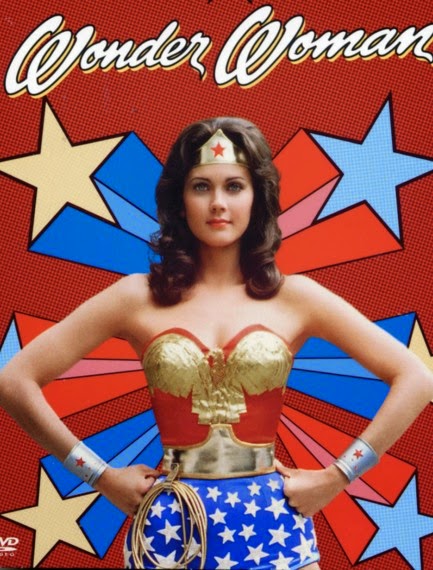
Thankfully, with some strange twists in continuity, she was given her powers again in the 1970's (perhaps again due to shifts in sexual politics?), and the camp TV series with Lynda Carter gave her a new place in pop culture.


Whether the TV series was true to her deeper symbolic side remains highly questionable, but the fact that she was sky-rocketed to the forefront of the imagination of boys, girls, men and women alike says something about how right Masterton was all along that we need heroes and positive role models.


 And preferably something more than the latex-clad Catwoman who emodies the seductive, "dangerous" myth of women's sexuality, and something beyond the submissive, diminiutive role played by Supergirl.


 We need a complex, multi-faceted, mature woman, a Wonder Woman to inspire us. Her strengths and weaknesses, her beauty as well as her wisdom, her mothering nature as well as her her warrior energy, and her kick-arse sexuality, these are all the reasons I love Wonder Woman and proudly wear her symbol on my wrist!

Any woman with any inkling of these characteristics in herself is a Wonder Woman.

Saturday, 3 April 2010

Blaze


I took three 15 year old girls to see a dance performance called Blaze and they were completely blown away! It was street dance brought to a professional stage and it was very impressive. Young dancers from all over Europe and the USA, and a creative team with more credentials than you could poke with a body pop.

Director Anthony van Laast has choreographed and directed West End shows from Oliver to Mamma Mia and worked on films like Harry Potter, choreographers Ryan Chappell and Chris Baldock have worked with the likes of Janet Jackson, Kylie, Black Eyed Peas and done ads for Adidas and Nike, set designer Es Devlin designed the set for Lady Ga Ga's Monstor Ball tour and lighting designer Patricj Woodroff has done shows for the Rolling Stones andMichael Jackson. Add to that the video and projection genius of The Mega Super Awesome Visual Company (yes that is their real name) and you have a visual spectacle that beats any video clip or action film you've seen in the last 10 years.

Oh yes, and the dancers....wow. What I loved was the energy and vibrancy that was unashamedly street and young and kick-arse. And I loved that there was a gender neutral style to it all. Of course the guys and the girls had some different moves, some duets, some dance-offs, but across the board they were all equal players. The costumes were gender neutral street wear - baggy pants and tops, peak caps, sometimes tracksuits or black and white suits, but almost no difference between the male and female dancers.

And though were wa a beautiful duet that had a sexual tension, it was more about the discovery of movement and expression than anything contrived.

The audience was predominantly made up of teenagers who cheered and screamed at appropriate moments. Of course when the young male dancers stripped off to swap shirts and expose thier fit young bodies the theatre was filled with young screams of excitment from the girls. Interestingly when two female dancers did the same, with a wink, there was a far more self conscious and brief cry from the boys in the audience. They were happier to cheer for their male counterparts on stage.

And there was even an explicit commentary from the MC in one of the dances, which was a comic piece about food. It began with him saying " you don't need to be skinny to be a model these days. You're sexy if you like you're own body. You can eat what you like. Everyone who likes beef let me hear you scream! Anyone who likes chicken let me hear some noise!" He then begana dance about beef, chicken, broccoli, beans, cellery and had the adolescent crowd giggling and the more politically minded among us smiling quietly.

Really exciting to see street dance and top notch theatre producers collaborate on such a dynamic production and bring young people into the theatres. And really exciting that street culture is so conducive to breaking down gender stereotypes.

Thursday, 25 March 2010

Sex and the City - One of the guys???


For those of us who are fans of Sex and the City, we are willing to admit it has an overtone of consumerism, a focus on fashion labels, a presentation that some feminist commentators will criticise as being misrepresentative of the notion of choice (how free are we really if we are still spending energy primarily on choosing which shoes go with which outfit) and reinforces stereotypes of body image and values which we should question.

But we fans will also tell you SATC is a commentary on so many issues which women in the 21st century face. We strive to have fulfilling careers, find meaning outside our fashion, find support in our circle of female friends and sisters, try to combine children and mothering instincts with our need for independence, and the juggling act of all of this with finding a partner who will support us in our career and still fulfil us as women. And it is a commentary on the kind of men we are looking for (for those of us who are het. There is an interesting heterosexism which is never addressed in this show, especially given the fact there are various gay male characters in SATC, fun-loving companions who share the women's view on the world, inclduing love and fashion, but no mention is made of the fact that actress Cynthia Nixon, who plays working mother Miranda, happens to be a lesbian).

There are so many issues dealt with in a way so many of us can relate to - single motherhood, unfulfilled wish for children and fertility issues, breast cancer, sexual identity, career choices, balancing between career and love, where we seek our sense of fulfilment and sense of self, what is success, what is age, what is beauty. And the formula of Carrie Bradshaw's question-asking columns works every time to get us nodding or looking in the mirror and wondering.

It's just a pity, then, that when I read a short interview with Sarah Jessica parker about the first SATC film (which even to die-hard fans was a "light" and therefore highly unsatisfying version of the real thing) she twisted this identification women have with the characters into a gender conversation that totally misses the point. She rightly commented that the fact that the characters talk so openly about work and sex and what they do and don't like or want is a move forward for female characters in popular media. She unfortunately said this meant we are finally "one of the guys".

Why can't this be about what we are all looking for? What it is to be a woman in the 21st century. Why does this have to be about being in a man's world, and qualifying sexual and career emancipation and the open discourse as "being one of the guys"? Sorry, Sarah Jessica, you lost me on that one.

Friday, 19 March 2010

Alice in Wonderland


I watched Tim Burton's 3D film tonight with three wonderful ladies and we all enjoyed the fantasy of it and the 3D effects.

The thing I found most exciting, though, was the girl discovering herself as a warroir woman in the central character. The Mad Hatter said in disappointment that she used to be much more...much. She had lost her muchness. Alice was afraid to be The Alice and kept denying she was the one. Eventually after encouragement and appeal, she took on the challenge of recovering her muchness, making her own path, and slaying the Jabberwocky, knowing when she stood there with sword in hand, she would be standing alone.

She was afraid to claim herself, to grow up, to face her inner demon. But once she realised all she had to do was remember her future, and declare who she is, it appeared inevitable. And she just had to believe the impossible was possible - simple, really, considering the other impossible things around her.

I loved that in the final climactic scenes she was dressed in armour, a tribute to Joan of Arc and other women warrirors who have gone before her. She didn't have to be another big-busted, hyper-sexualised cartoon-like heroine. She was a woman in armour facing her demon, and though she was scared and though it hurt, she fought to the death. And then returned to peace.

Thank you Tim Burton for providing us with a narrative that returns to the magic and inspiration of Lewis Carrol - to believe the impossible, to go with the madness and magic of life - and at the same time for providing us with an Alice who is a true heroine, turning within to find the answers when she is looking for who she is, reminding us to follow the path by carving out our own and following the road less travelled. And doing so as an independent yet vulnerable young woman, feminine and strong all at once.